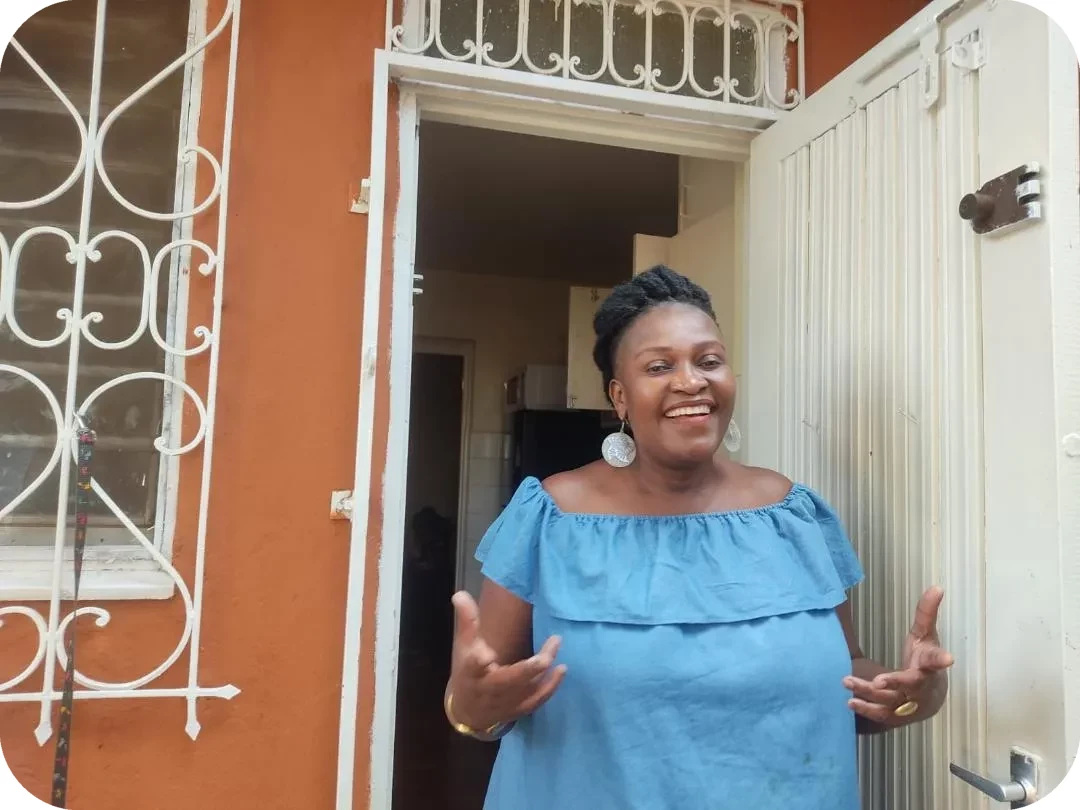
For Cecilia Ayot, winning and losing in elections are familiar experiences
in her political journey: She has won one election and lost two.
But the 2022 election gave her more sorrow than any other election
she has participated in. She encountered countless painful experiences
that left a bad taste in her mouth.
Ayot feels she lost the elections not because of lack of competence, but
due to a massive smear campaign against her.
“I remember some days trying to wake up in the morning to hit the
campaign, but resisting the urge out of fear of what my opponents
were going to do next,” says Ayot, a former MCA of Laini Saba Ward in
Kibra Constituency, Nairobi.
She says the pain of losing an election can linger on for many years, and
sometimes affects future decisions women make in regard to political
contests. That is why there are arguments that women who lose
elections require psychological support.
Ayot’s journey into politics started in 2013 when her constituents
prodded her to vie for a political seat. They felt she would offer
effective leadership based on her track record of running
transformative social initiatives targeting women and girls in the Kibera
community.
“Growing up in Kibera, I saw many women and girls suffer a lot because
of lack of water. Young girls were forced to exchange sex for water.
These were some of the issues that I tried to address.”
But one obstacle stood between her and contesting for a political seat:
Academic qualification. However, Ayot who dropped out of high school
in 1995 after she got pregnant, vowed this was not going to stop her
ambitions.
She sat the Kenya Certificate of Secondary of Education in 2012 in order
to qualify to vie in the 2013 elections. Like many other women, she
says, the decision to vie in 2013 was baptism by fire into the world of
politics.
It was tough. She lost the contest. But in 2017, she used the lessons she
learnt to win that year’s election. She believes her work with the
communities in Kibera to access water and education saw her win the
hearts of many voters in the ward.
Her happiness did not last for long. Her decision to go against the
position of the political party that took her to the assembly on the
impeachment of the then speaker Beatrice Elachi, who is currently the
MP for Dagoretti North, made her unpopular.
“I was de-whipped from all committees as punishment,” she says.
Again, she skillfully used the same party machinery to resolve her
issues. Her game-plan was to manage the acrimonious relationship
before the 2022 elections. What she did not realise was that many
people were still unhappy with her. They hatched a plan to finish her
politically.
“All other sitting women MCAs were given a direct ticket, except me.
Worse still, I was made aware that the party was conducting
nominations on the very day the nominations were being conducted. I
did not have agents, my supporters were not prepared to participate, it
was all chaos,” she recalls.
Still, she participated in the nominations, and won. Her grassroots
networks came to her aid at this time of need.
“This was one of the highlights of my campaigns in 2022. Winning the
nominations that were designed for me to lose,” she says.
This win made her reach out to many organisations to support her as
she prepared for the elections. Very few did. For some, they could not
support her because the design of their support programme did not
include MCAs. This reasoning left her confused.
“For us to attain two-thirds gender rule, women need to be
empowered from the grassroots. It is these women (MCAs) who grow
up to become future MPs, governors and even senators,” she says.
All these developments helped her to draw key lessons from previous
and the 2022 elections. One of it is that technology can be used to build
or destroy you.
In fact, in the 2022 elections, Ayot says due to the online violence she
faced in 2013 and 2017 elections, she avoided online engagements in
the 2022 elections.
Instead, she used her development record and grassroots networks to
woo voters and engage in door-to-door campaigns.
The irony, notes Ayot, is that it is the same technology, a post on
Facebook, that saved her from being rigged out during party
nominations.
She feels that to consolidate the gains and ensure women like her
continue winning, development partners should invest in empowering
women vying for the MCA position as well.
“They need to look for the ones already elected and continue
empowering them,” she notes.
This support, she feels, should go beyond elections.
“So many women are struggling in county assemblies and Parliament,
trying to master their roles and rules of engagement. They need help,”
she says.
Ayot also feels that gender advocates need to do a post-election
analysis with women who lost so as to understand what went wrong
and establish a support system for them.