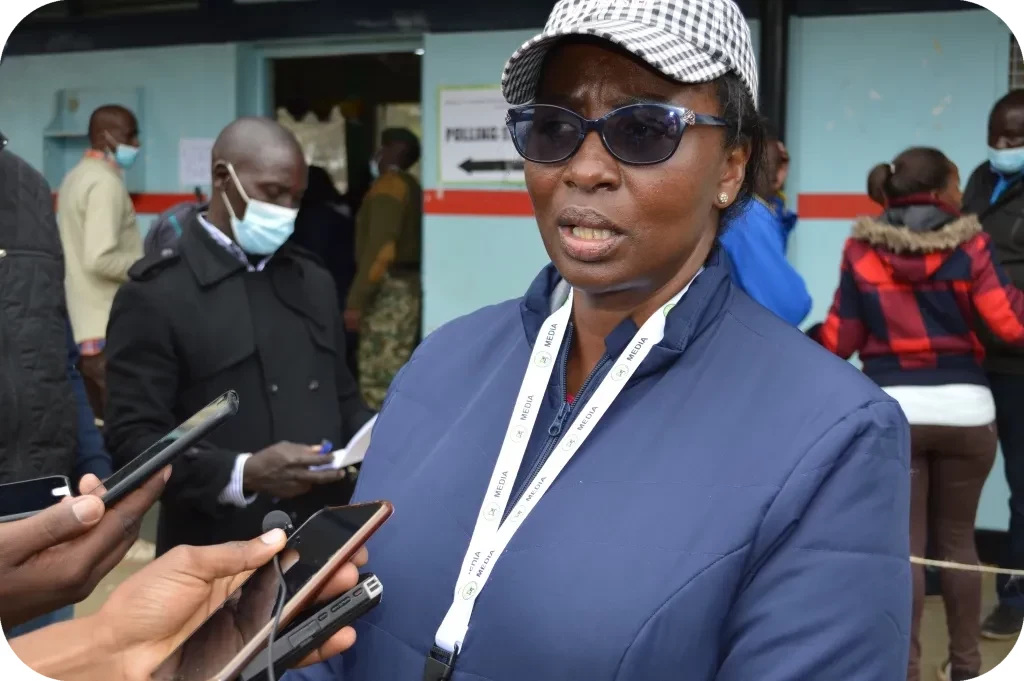
As Kenyans joined the rest of the world in marking International
Women’s Day (IWD), women leaders across the political divide called
for increased investment in women empowerment programmes
tailored towards the realisation of gender equality.
In reaffirming the 2024 IWD theme: Invest in Women and Accelerate
Progress, the women Members of Parliament and Senators cited Article
100 of the Constitution of Kenya which promotes representation of
marginalised groups notably women, youth, and Persons with
Disabilities (PWDs).
The legislators singled out Article 27 of the Constitution, which they
said was key in pushing for equality and access to other range of rights,
among them, freedom from discrimination based on ethnic or social
origin, age, sex, disability and religion, among others.
“We need to push for the actualisation of these constitutional
provisions to help break the barriers and create an environment where
all women are valued and respected,” said the legislators. But, they
warned, this can only happen if there is greater investment in gender
equality programmes.
Among those present were: Beatrice Elachi, the MP for Dagoretti
North; Crystal Asige, a nominated senator representing persons with
disability; Jane Njeri Maina, the Woman Representative for Kirinyaga
County; and former nominated MP Denittah Ghati.
Speaking during the People’s Dialogue Forum organised by the Centre
for Multiparty Democracy (CMD) under the banner Inspiring Inclusion,
the legislators reiterated that the constitutional clauses have not only
served to inspire inclusion but have helped to promote diversity in
leadership and decision-making platforms.
“We have the Affirmative Action seats as outlined in the constitution
among them the 47 Woman Representative seats and the nominated
seats in the Senate, as well as the national and county assemblies,
which have gradually increased the number of women in Parliament,”
said Jane Njeri Maina, the Woman Representative for Kirinyaga County.
According to her, there is need to educate the public to understand the
value of women’s inclusion in the political arena.
“Women bring unique perspectives before the floor of the House and
we must celebrate gains made by women MPs in actualising certain
legislative processes that promote the rights of marginalised groups.”
For instance, she noted, women contributed tremendously to the
enactment of family and gender-based violence legislations. These are:
Matrimonial Property Act, Marriage Act, Protection Against Domestic
Violence Act, and Prohibition of Female Genital Mutilation Act. These
laws have gone a long way to protect and advance women rights.
She, however, points out that Parliament remains insensitive to young
women legislators.
“For instance, we do not have breastfeeding rooms to cater for
lactating women legislators in Parliament. It is like we are being told to
put on hold our reproductive roles.
“Women in the 21 st century do not have to put on hold their
reproductive roles at the expense of jobs and therefore we must be
provided with a conducive environment to thrive.”
The women leaders also spoke about unfairness in the allocation of
funds to enable them engage in development projects in their areas of
jurisdiction.
They talked of huge disparities of how allocations are done.
For instance, they noted, each Member of Parliament in a single
constituency has a staggering budget of Sh180 million to enable them
execute projects in their constituents; while the 47 County MPs receive
a mere Sh9 million for each constituency, which is not enough to
undertake meaningful development.
They were disappointed that the County MPs are supposed to
represent women, youth and persons with disabilities with the meagre
resources yet they are put on the same weighing scale as MPs in single
constituencies during electioneering period.
Political experts think these disparities and low allocation to
development projects for County MPs might explain why there is a high
turn-over for women county MPs every election cycle, with majority of
them unable to retain their seats.
The legislators argue that for inclusion to succeed, there is need to
bridge the gap in financing disparities at the Legislature level and pay
disparities in the private sector.
There was a feeling that policies guiding many institutions, including
Parliament, do not allow women to thrive.
Crystal Asige, a nominated senator representing persons with disability
observed: “Even as we talk about the two-thirds gender rule, we must
promote inclusion by pushing for the equal representation of other
marginalised groups.”
Asige at the same time urged women in political parties to speak out
against inequalities within political parties and demand they invest in
gender equality initiatives.
“We must be bold, intentional and radical to inspire inclusion within
political parties. We need advocacy and policy change to help deal with
structural barriers at the political and national level.
Ghati expressed optimism about the effectiveness of women leaders in
Parliament, bringing about change that promote gender equality. But
she said that this can only happen if women leaders speak with one
voice at political rallies or other forums.
Ghati challenged MPs to ensure the country attains and upholds the
two-thirds gender principle that is key to attaining fair representation in
the National Assembly.
“The more women we have in Parliament, the easier it becomes to pass
gender responsive legislations and champion for things like the free
sanitary towels in schools.
Beatrice Elachi, the MP for Dagoretti North and the Vice Chair of Kenya
Women Parliamentarians, reminded the women MPs that the gradual
increase in the number of women in all arms of government is as a
result of consistent and tireless efforts of “our pathfinders whose
shoulders we stand on.”
“It is important that female legislators understand the history of
women empowerment so that they soldier on with full appreciation of
those who came before them.”